
1. Introduction
Selecting the appropriate circuit breaker is crucial for ensuring the safety, reliability, and efficiency of electrical systems. Circuit breakers protect electrical circuits from damage caused by overload or short circuit by automatically interrupting the flow of electricity. The choice of circuit breaker depends on various factors, including the voltage level, application, and specific requirements of the electrical network.
2. Understanding Circuit Breakers
Circuit breakers are classified based on their voltage ratings, operating mechanisms, and the medium used for arc quenching. The main types include:
- Air Circuit Breakers (ACB): Suitable for low-voltage applications up to 1kV. They use air as the arc-quenching medium.
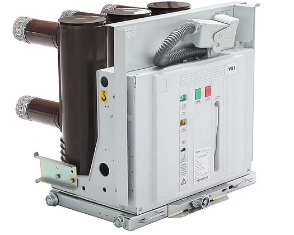
- Vacuum Circuit Breakers (VCB): Used for medium voltage applications (up to 36kV). They employ a vacuum to extinguish the arc.
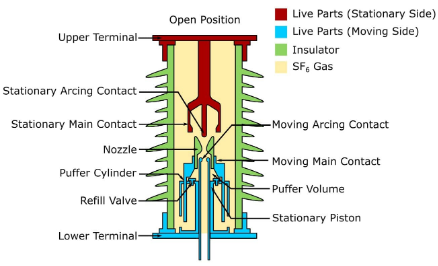
- SF6 Circuit Breakers: Ideal for high-voltage applications (above 72.5kV). They utilize sulfur hexafluoride gas to quench the arc.
- Oil Circuit Breakers (OCB): Used in older installations, these breakers use oil as the arc-quenching medium.
3. Technical Specifications for High-Voltage Circuit Breakers
High-voltage circuit breakers must meet stringent technical specifications to ensure reliable operation:
- Voltage Ratings: Circuit breakers are rated for specific voltage levels, such as 11kV, 33kV, 110kV, 220kV, and 400kV.
- Breaking Capacity: The maximum fault current a circuit breaker can interrupt without failure.
- Insulation Levels: The dielectric strength of the breaker, ensuring it can withstand voltage surges.
- Operating Mechanisms: The system that charges and releases the breaker, including spring-charged or motor-operated mechanisms.
Amazon Affiliate Product:

4. 11kV Circuit Breakers
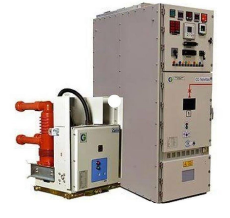
11kV circuit breakers are commonly used in distribution networks to protect feeders and transformers. They are typically VCBs or SF6 breakers, depending on the application.
5. 33kV Circuit Breakers
33kV circuit breakers are used in sub-transmission systems to step down voltage from 132kV or 220kV for distribution. They are typically SF6 breakers due to their high dielectric strength.
6. 110kV Circuit Breakers
110kV circuit breakers are used in primary transmission networks to protect lines and transformers. They are typically SF6 breakers with high breaking capacities.
7. 220kV Circuit Breakers
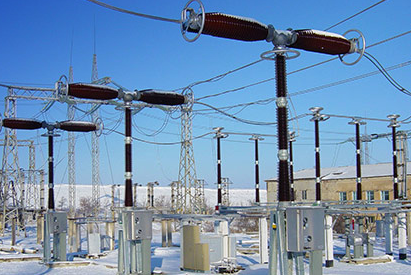
220kV circuit breakers are used in high-voltage transmission lines to protect against faults. They are typically SF6 breakers with multiple interrupter chambers.
Diagram: 220kV Circuit Breaker Installation
8. 400kV Circuit Breakers
400kV circuit breakers are used in ultra-high-voltage networks to protect critical infrastructure. They are typically SF6 breakers with advanced technologies for rapid fault clearing.
9. Comparative Analysis
| Voltage Level | Common Breaker Type | Key Features | Applications |
| 11kV | VCB, SF6 | Compact, reliable | Distribution networks |
| 33kV | SF6 | High dielectric strength | Sub-transmission systems |
| 110kV | SF6 | High breaking capacity | Primary transmission |
| 220kV | SF6 | Multiple interrupters | High-voltage transmission |
| 400kV | SF6 | Advanced technologies | Ultra-high-voltage networks |
10. Installation and Maintenance
Proper installation and maintenance are crucial for the reliable operation of circuit breakers:
- Installation: Follow manufacturer guidelines, ensure proper grounding, and perform dielectric testing.
- Maintenance: Regularly inspect for signs of wear, perform functional testing, and replace components as needed.
11. Future Trends in Circuit Breaker Technology
Advancements in materials and technology are leading to:
- Smart Circuit Breakers: Integration with SCADA systems for real-time monitoring and control.
- Eco-friendly Designs: Use of alternative gases to SF6 to reduce environmental impact.
- Enhanced Safety Features: Improved arc quenching and fault detection capabilities.
12. Conclusion
Selecting the appropriate circuit breaker involves considering factors such as voltage level, application, and technical specifications. By understanding these factors, one can ensure the safety and reliability of the electrical system.
💡 Lifestyle Tip: Complement your professional excellence with elegant designs from [Simone I. Smith jewelry on Rakuten

The Ultimate Guide to Choosing the Right Circuit Breaker
Choosing the right circuit breaker for your home is not just a technical task; it’s a critical safety decision that protects your family and property from electrical hazards. A circuit breaker acts as an electrical gatekeeper, designed to trip (shut off) when a problem is detected, stopping the flow of electricity before it can cause a fire or damage appliances. This comprehensive guide will walk you through the process of selecting the correct breaker, from understanding low-voltage home systems to the monumental high-voltage breakers that protect our entire electrical grid.
💡 Part 1: Residential Breakers – Protecting Your Home
The most common circuit breakers in a home protect against three primary electrical dangers: overloads, short circuits, and arc faults. Understanding these is the first step to ensuring your home is safe.
- Overloads: This occurs when too many devices draw current from a single circuit simultaneously, causing the wires to heat up. A standard circuit breaker uses a thermal trip mechanism, a bimetallic strip that bends under heat and trips the breaker, to prevent this. This is a time-delayed process, allowing for brief, normal current spikes (like a motor starting) without tripping.
- Short Circuits: This is a sudden and severe event where a live wire touches a neutral or ground wire. The resulting massive surge of current is a significant fire risk. A circuit breaker’s magnetic trip mechanism—an electromagnet—reacts instantly to this surge, cutting power in a fraction of a second.
- Ground Faults: A ground fault is an unintended path for electricity to flow to the ground, often through a person’s body. A Ground Fault Circuit Interrupter (GFCI) is a special breaker that detects even a minuscule imbalance in current and trips within milliseconds, preventing fatal electric shocks. They are required in all wet areas of a home, such as kitchens, bathrooms, and garages.
- Arc Faults: An Arc Fault Circuit Interrupter (AFCI) protects against dangerous electrical arcing, which can occur from damaged wires or loose connections. These small, flickering arcs can generate enough heat to ignite building materials. AFCIs use sophisticated electronics to detect the unique signature of an arc and trip the circuit before a fire can start.
Sizing Your Residential Breaker
The most important specification on a breaker is its amperage rating (A). This must be carefully matched to the wire gauge of the circuit to prevent overheating. The National Electrical Code (NEC) provides clear guidelines:
- 15A Breaker: Paired with 14-gauge wire, typically used for general lighting circuits.
- 20A Breaker: Paired with 12-gauge wire, for circuits with standard outlets and dedicated appliance circuits.
- 30A Breaker: Paired with 10-gauge wire, for large 240V appliances like electric dryers or water heaters.
Crucial Rule: Never install a breaker with a higher amperage than the wire’s rating. The wire is the limiting factor.

Buy this product on Amazon
🔌 Part 2: The High-Voltage World – Breakers for the Grid
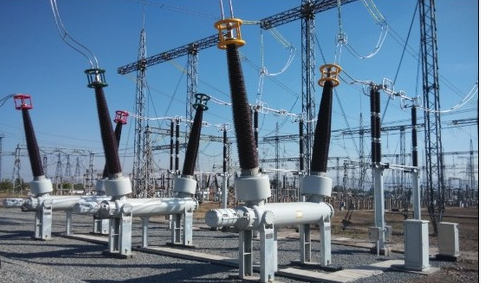
While residential breakers protect a single circuit, high-voltage breakers (11kV to 400kV and beyond) are monumental devices that guard entire electrical grids. They are located in substations and power plants, and their failure can cause widespread blackouts. The fundamental principle is the same—to interrupt a fault current—but the methods are far more complex due to the immense energy involved.
The Challenge of the Arc
When a high-voltage breaker’s contacts open, a powerful electrical arc forms between them. This arc, if not extinguished immediately, can cause catastrophic damage. The primary design challenge for high-voltage breakers is to rapidly cool and deionize this arc.
Types of High-Voltage Breakers Based on Arc Extinguishing Medium:
- Vacuum Circuit Breaker (VCB): Common for medium voltages (up to ~36kV). The contacts are sealed in a vacuum chamber. Since there are no air molecules to ionize, the arc cannot form, and the current is interrupted almost instantly.
- Diagram: A simple vacuum interrupter consists of a sealed ceramic or glass envelope containing fixed and moving contacts. A metal bellows allows the moving contact to travel while maintaining the vacuum.
- SF₆ (Sulfur Hexafluoride) Circuit Breaker: The industry standard for high and extra-high voltages (33kV to 800kV). SF₆ is a non-toxic, non-flammable gas with incredibly high dielectric strength. When the contacts open, the gas rapidly absorbs the electrons from the arc, neutralizing the charged particles and extinguishing the arc.
- Diagram: An SF₆ breaker is a large, complex device with one or more sealed SF₆-filled interrupter chambers. The SF₆ gas is pressurized and often recycled internally after an operation.
The Anatomy of a High-Voltage Breaker
A high-voltage breaker is a complex assembly of several key components:
- Operating Mechanism: A powerful spring-charged or hydraulic system that provides the immense force to open and close the contacts in milliseconds, independent of the operator’s speed.
- Interrupting Unit: The sealed chamber containing the contacts and the arc-extinguishing medium (vacuum, SF₆, etc.).
- Insulators: Large porcelain or composite insulators that support the live parts of the breaker and ensure they are electrically isolated from the ground.
- Control and Relay Panel: The “brain” of the breaker. It contains the protective relays, which constantly monitor the current and voltage on the power line. When a fault is detected, the relay sends a signal to the operating mechanism to trip the breaker.
- Current and Potential Transformers (CTs & PTs): Vital devices that step down the high voltage and current to safe, low levels that the relays can read.
High-voltage breakers are part of a larger electrical system, typically represented by a Single Line Diagram.
- Incoming Line: The high-voltage power from a transmission line.
- Isolators (Disconnectors): Manual switches used to physically isolate the breaker for maintenance.
- Circuit Breaker (CB): The high-voltage breaker that interrupts the fault current.
- Current & Potential Transformers (CT & PT): Measure the line’s electrical parameters for the relay.
- Main Bus Bar: The central high-voltage conductor that distributes power to various outgoing circuits.
- Transformer: Steps down the voltage to a lower level for local distribution.
- Outgoing Feeders: The lines that distribute power to homes and businesses, each protected by its own circuit breaker.
The Importance of a Professional
While understanding the principles is empowering, any work on an electrical panel—residential or industrial—must be performed by a qualified, licensed electrician. Electricity is extremely dangerous, and a mistake can be fatal. An electrician has the tools, training, and knowledge to ensure that the correct breaker is installed, that all work complies with the latest electrical codes, and that your system is safe.
By understanding the purpose and function of circuit breakers, from the small ones in your home to the giants on the grid, you gain a deeper appreciation for the complex systems that keep our modern world powered and safe.